A Children’s Book, a Packed Library, and a Community Standing for the Right to Read
An eyewitness account on the recent Salado, Texas library board meeting.
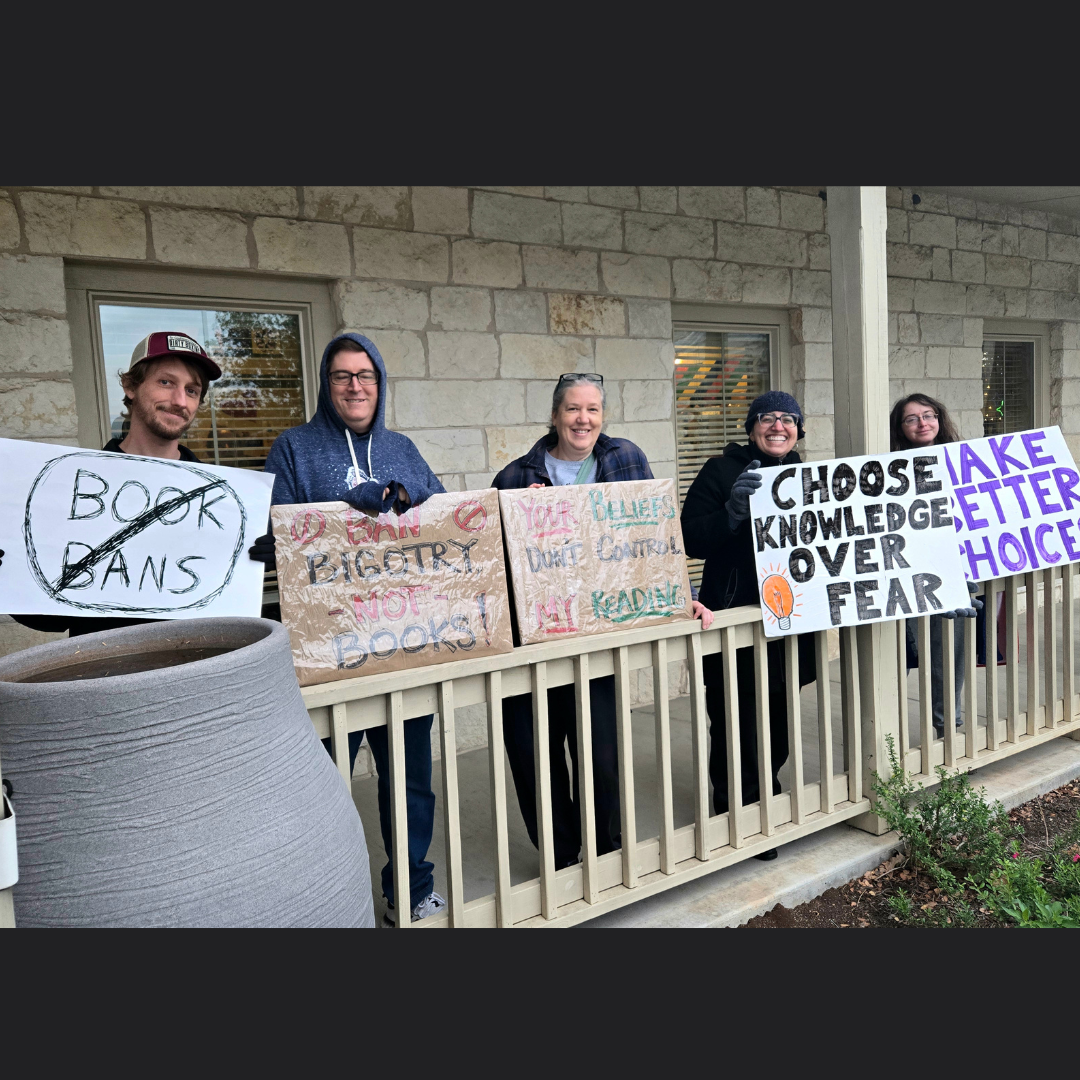
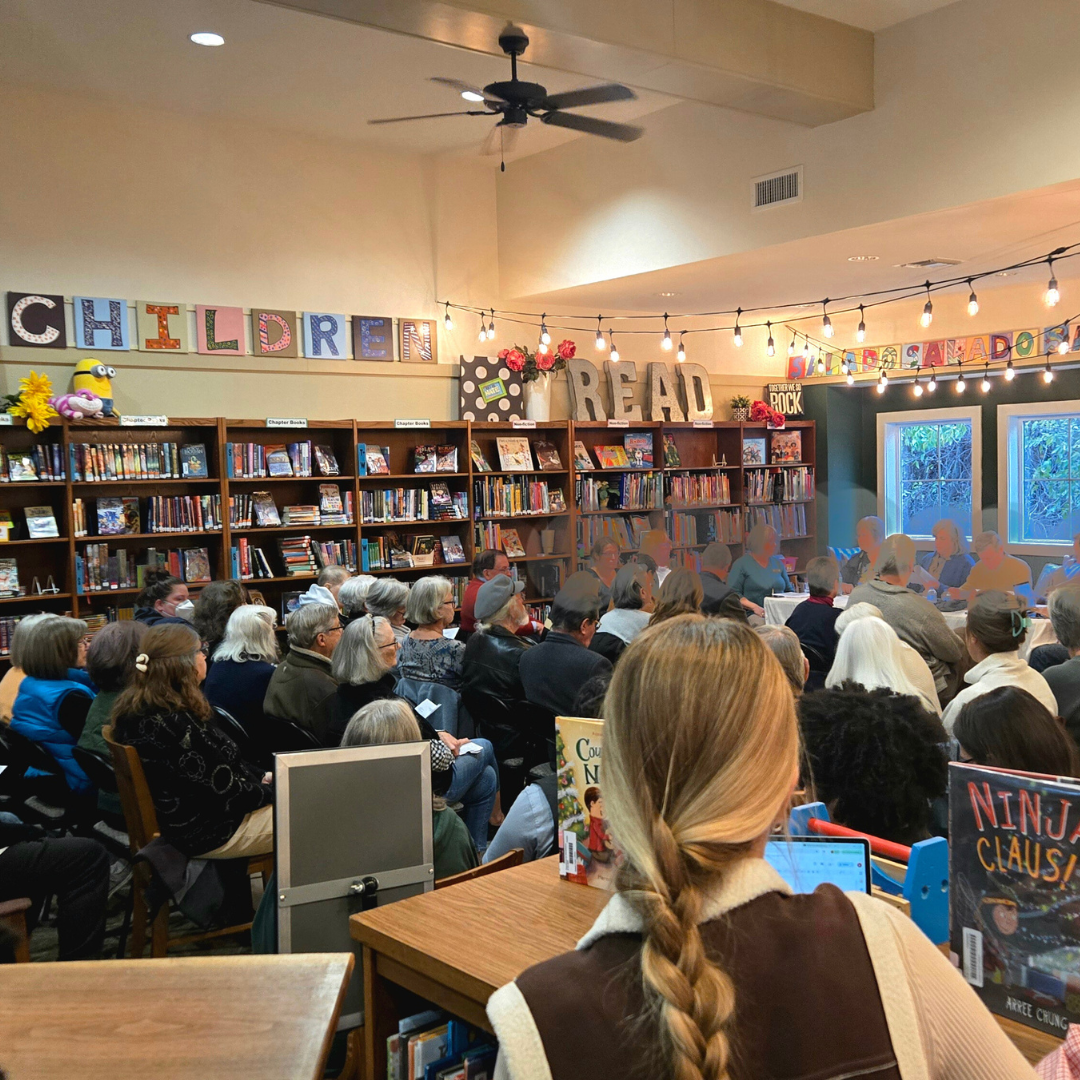
{Guest Post by Miranda Williamson} What began as a petition to remove a single trans-affirming children’s book became a town debacle as over 100 people packed into the Salado Library. Parking was full and spilling into the nearby grocery store and gas station lots. Outside, protesters with Indivisible Centex held signs proudly displaying slogans like “Your beliefs don’t control my reading,” and urged attendees to “Choose knowledge over fear.”
Weeks earlier, Stephen Sequeira of Salado had written a letter to the editor of the Salado Village Voice. He began with the statement: “On October 27, the Salado Public Library notified me that my formal request to remove When Aidan Became a Brother from the library’s collection had been denied.” He then argued that the children’s book is actually “ideological material about gender transition aimed at preschoolers.” Although he asserted that his request wasn’t about banning books, he aimed for his actions to lead to a book being banned from a public library. Sequeira urged community members to attend the upcoming board meeting and speak out against the book.
That call to action prompted an immediate response from pro-intellectual-freedom advocates. Organizations like the Texas Freedom to Read Project called on community members to support the library’s decision to keep the book on the shelves. Banning a book based on one person’s opinions amounts to censorship—an act poorly received by readers, learners, and citizens who support freedom of information. One demonstrator outside the meeting, Sarah Williams, told me that Indivisible Centex was present to protest both book bans in general and the removal of access to affirming LGBTQ+ materials. She explained that those in power benefited from an education that included diverse perspectives, “from all kinds of sides. If we don’t allow our children access to knowledge of all things, that can only be to our detriment.”
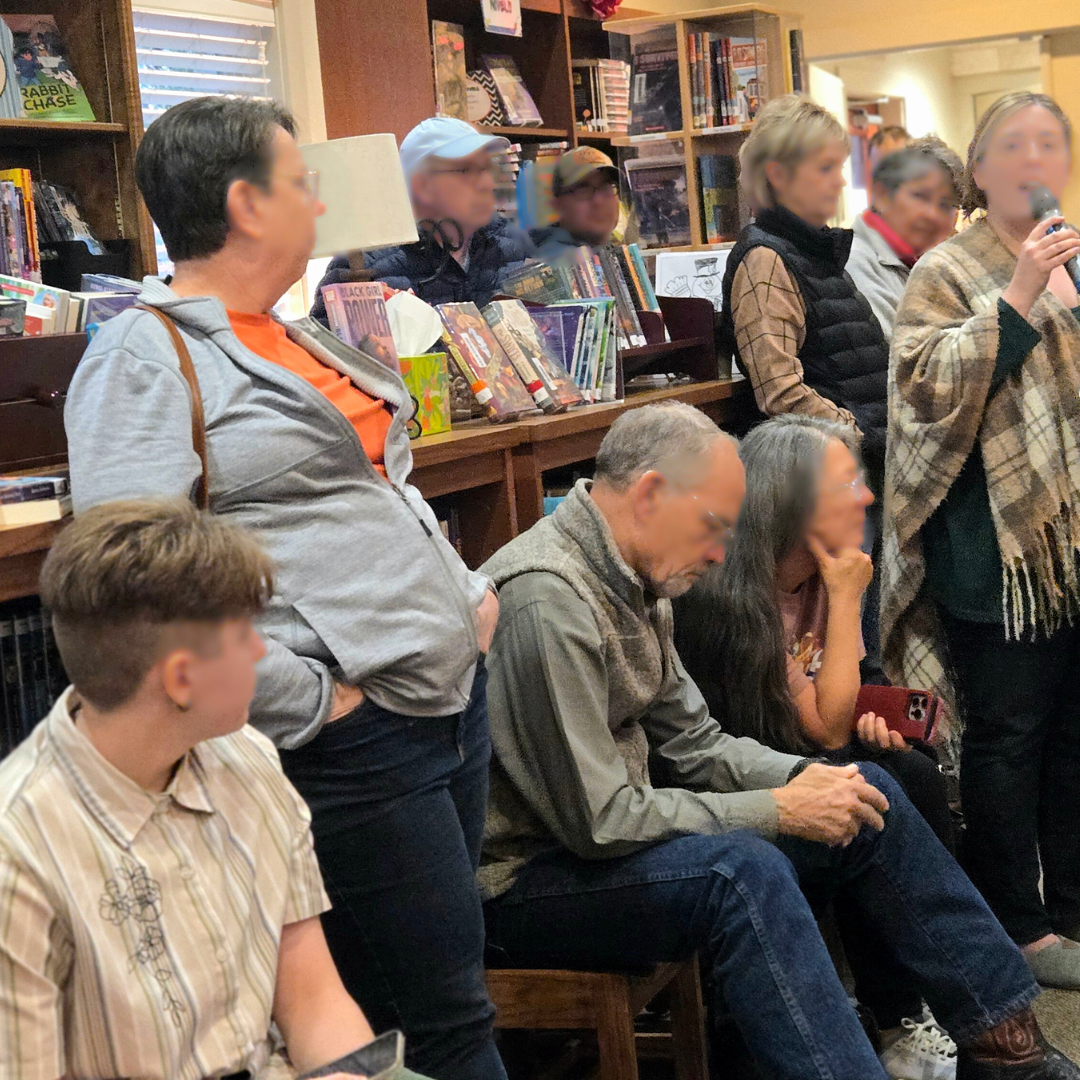
Over 23 speakers from the Salado community registered for public comment at the Salado Library Board of Trustees Meeting on December 1st. The comments came from former librarians, concerned parents, adolescent library-goers, and other readers. Though their opinions were predictably split along party lines, the intellectual capacity in the room was a marvel—a feat only achieved by the freedom to read.
Those speaking against the book were most concerned with the “indoctrination” of their children. “This book glorifies a mental illness,” said Allison Dolin. “There is a difference between censorship and protecting impressionable children…a taxpayer-funded library should not be engaged in continual learning along those lines.”
Others lobbied for a compromise, asking for the book to be moved to an adults-only section rather than banned altogether. “No government agency is going to make books inaccessible,” Cindy Sanders said. “The issue is that taxpayer dollars are being used to place a book in the children’s section that lies to children about their gender.”
Former Salado librarian Karen Kinnison disagreed, arguing that “When we remove [books], we don’t protect children. We limit their ability to think and empathize and learn to disagree. Thoughtful decisions about reading belong to families, educators, and libraries that follow professional standards, not to a small group imposing a single viewpoint onto an entire community.”
Perhaps the most impactful comment came from Austin Kelly, a trans man: “I understand that the individuals here who want this book removed have no malicious intent, and I admire their persistence and passion for the well-being of this community’s kids. However, I also ask that they understand that simply removing this book will not remove LGBTQ stories from our children’s lives. Queer people are your neighbors, friends, babysitters, teachers, firefighters, and cashiers…taking this book off the shelf will not get rid of us. It will only make us less welcome in this beautiful area that we have a right to call home. This book will not make your child transgender. But it will make them kinder, more knowledgeable, and better equipped to show love to those who need it.” Kelly’s comments reframed the evening, reminding the room that this debate was not abstract—it was about real human beings.
Many of the speakers had no thoughts on the content of the children’s book but spoke adamantly against the practice of banning books in general. One speaker noted: “As a teen who comes to the library regularly, I don’t think anyone but my parents has a right to tell me what I can and can’t read.” Another reminded board members of the historical correlation between censorship and persecution. Several echoed the sentiment that if a parent disapproves of a book’s content, it is their right to prevent their child from reading it. This writer agrees—a parent’s decision to limit what their child reads does not obligate a public library to restrict access for everyone else.
One board member, Dana Rojas, read from a statement submitted by author Kyle Lukoff, the author of When Aidan Became a Brother: “In saying that my books are inappropriate, what are they saying? That the way I live my life, that the kind of person that I am is someone who is inappropriate to be around children in the first place…When children cannot find themselves reflected in books, or when the images they see are distorted, negative, or laughable, they learn a powerful lesson about how they’re devalued in the society of which they are a part.”
Rojas herself spoke strongly in favor of the book staying. “The idea is to protect all kids, but it’s not. Let’s be real. That statement doesn’t count for the LGBTQ. It doesn’t count for the kids experiencing gender differences. This book is probably going to save a life long before it’s going to change what your child thinks.”
Stephen Sequeira was also in attendance and applauded the civil discourse and responsibility of all community members who had appeared to speak. “No matter what side of the issue you’re on, I really appreciate you being here. I think it’s important for the community to be engaged…to care about what’s happening.” To the board members, he said: “I want to clear up a misunderstanding…This has nothing to do with you personally; you are all wonderful, warm people. You’re all very competent librarians.”
Gracious words aside, the real test of competence was whether the board would defend intellectual freedom. Despite the objections raised, the board ultimately voted 3–1 to keep the book in the library’s collection. The significance of that decision extends far beyond one title. The debate in Salado revealed what countless Texas communities are now confronting: whether public libraries will remain places where children can encounter the full range of human experience or be narrowed to reflect the fears of only a few. It is our responsibility as parents, students, readers, learners, educators, and advocates to ensure that all books remain free to obtain and share—regardless of our personal opinions on subject matter.
About the author: Miranda Williamson
Miranda Williamson lives and writes in Central Texas. She is a social work student and former crisis counselor who examines issues related to education, social welfare, and mental health policy. As a lifelong reader, she adamantly opposes book bans.